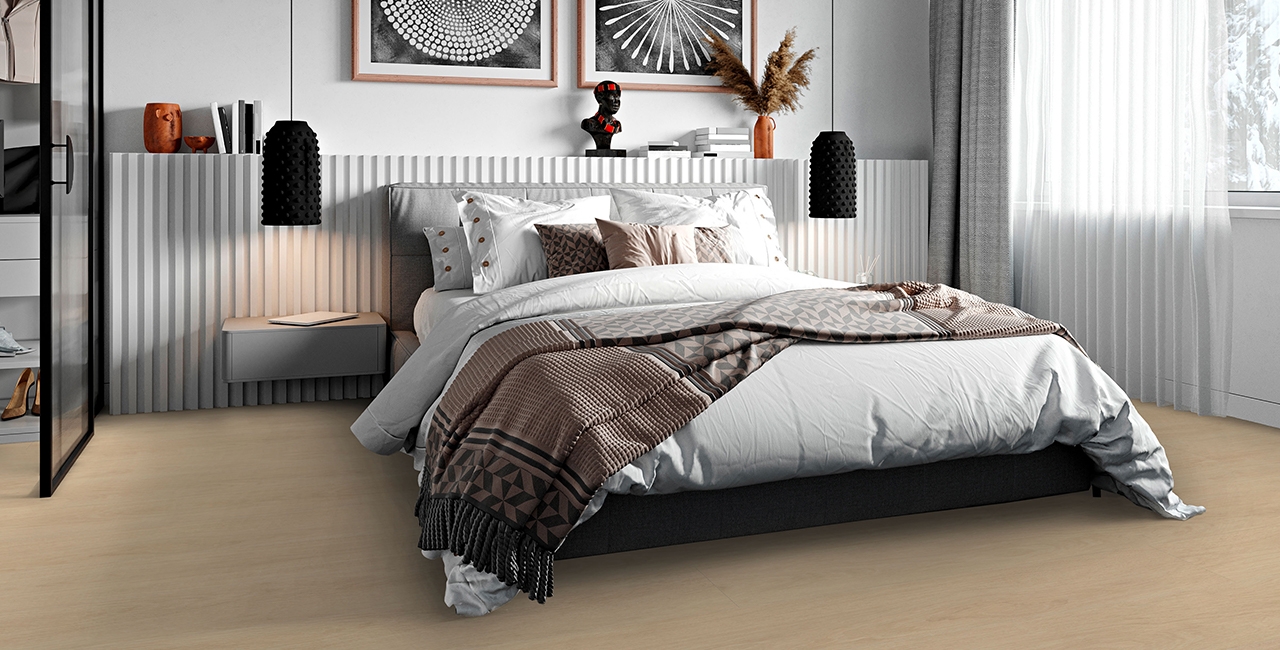
Herringbone – a timeless trend in floor design

In the world of interior design trends, many styles come and go, but there are also those that retain their charm despite the passing years. One of them is herringbone – a classic method of laying panels and parquet that has delighted with elegance, symmetry, and universality for centuries. Today, herringbone is making a comeback in a modern version, becoming a synonym for good taste and timeless style.
Why choose herringbone panels?
Herringbone is a pattern that not only catches the eye but also influences the perception of the entire interior. Thanks to its characteristic diagonal arrangement, the floor gains dynamism and depth, making the space appear more refined and harmonious. This solution works perfectly in both classic, elegant interiors and modern arrangements – minimalist, industrial, or Scandinavian styles.
Types of herringbone – classic and modern
Contemporary panel production technologies allow for various variations of this timeless pattern. The most popular include:
1. Classic (English) Herringbone
This is the most traditional layout – planks form a “V” shape, arranged at a 90° angle. This pattern is associated with elegant, palace-like interiors, but today it is also often found in modern apartments.
2. French (Chevron) Herringbone
In this version, the ends of the panels are cut at a 45° or 60° angle, creating a more orderly, geometric effect. French herringbone is exceptionally stylish – ideal for glamour, Art Deco, or modern classic interiors.
3. Hungarian Herringbone
Similar to the French but with a smaller angle of 60°. It provides a subtler visual effect and pairs beautifully with natural wood tones.
Which interiors suit herringbone?
The versatility of herringbone is one of its greatest advantages.
- In classic arrangements, it emphasizes elegance and references tradition.
- In modern interiors, it creates a striking contrast with simple furniture and minimalist forms.
- In loft spaces, it adds warmth and coziness.
- In Scandinavian design, it forms a harmonious base for natural materials and light colors.
Thanks to a wide selection of decors – from natural oak shades to cool grays and warm beiges – herringbone panels can be matched to almost any style.
How to lay herringbone panels?
Installing herringbone panels requires a bit more precision than traditional straight laying, but the final effect is worth it. Modern mounting systems, such as click-lock panels, significantly simplify the process – no glue or specialized tools are needed.
A few tips:
- Choose the direction of laying aligned with the length of the room to visually elongate it.
- For large spaces, opt for French herringbone, which adds rhythm and elegance.
- In smaller areas, a classic herringbone works better – more subtle and less dominant.
Timeless character, modern solutions
Thanks to vinyl and laminate panels in herringbone, you can now achieve the effect of a luxurious floor even without solid wood parquet. These panels are resistant to wear, moisture, and easy to maintain, while faithfully reproducing natural wood. It’s the perfect combination of design and functionality, making herringbone a permanent feature in modern homes and apartments.
Summary
Herringbone is not just a fashionable pattern – it is a style that has withstood the test of time. Whether you choose the classic English herringbone, the elegant French version, or the subtle Hungarian pattern, you can be sure that your floor will become a true highlight of your interior. The Avax Distribution offers herringbone in the collections CASTLE by MY FLOOR and HERRINGBONE by THE FLOOR.